
There’s a small panic that happens in every security queue.
You pat your pocket. Check your bag. Pretend to look calm while you slowly melt inside. Is the passport there? The boarding pass? The ID? The printed hotel reservation you probably didn’t need?
For most travellers, that micro-moment is part of the ritual. A little anxiety with your airport coffee. But if 2024’s numbers are anything to go by, the ritual might be dying.
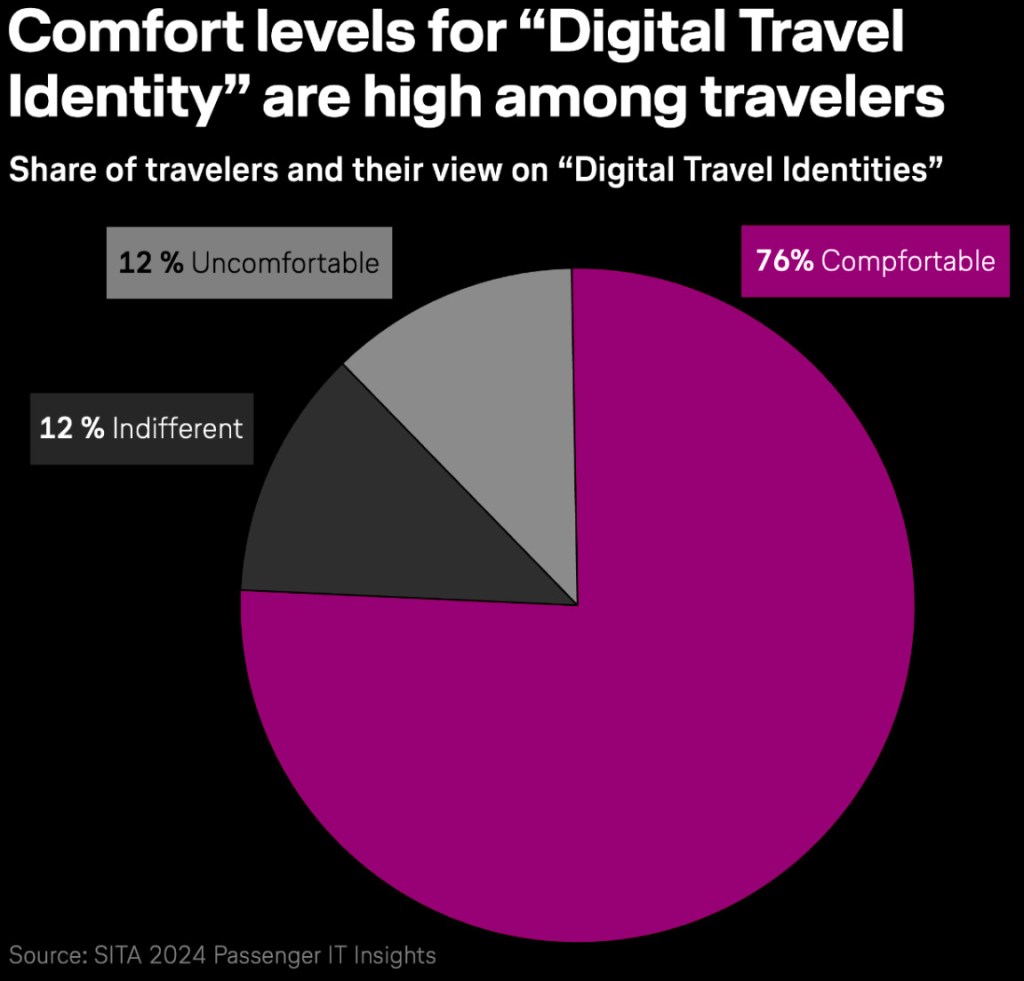
According to SITA’s 2024 Passenger IT Insights, 76% of travellers say they’re comfortable using a Digital Travel Identity. Only 12% feel uncomfortable. The rest don’t care either way. Which is fine. Not everyone has to lead the charge.
And while comfort is one thing, momentum is another.
In the U.S., TSA checkpoints in 11 states now accept digital ID through Apple Wallet at select airports. Google Wallet is next, prepping to support digital versions of U.S. passports. Delta has expanded its Digital ID programme to more airports for TSA PreCheck travellers, making biometric, phone-linked ID more than just a tech demo.
This is the direction the industry is heading, and it’s good news.
Because once digital identity becomes standard, wearables can evolve into the ultimate travel companion.
The future of seamless travel isn’t just mobile-first. It’s wearable-enabled.
And the airlines that start designing for this reality now? They’ll be the ones shaping the future travel experience. Maybe before the next cruise line beats them to it again.
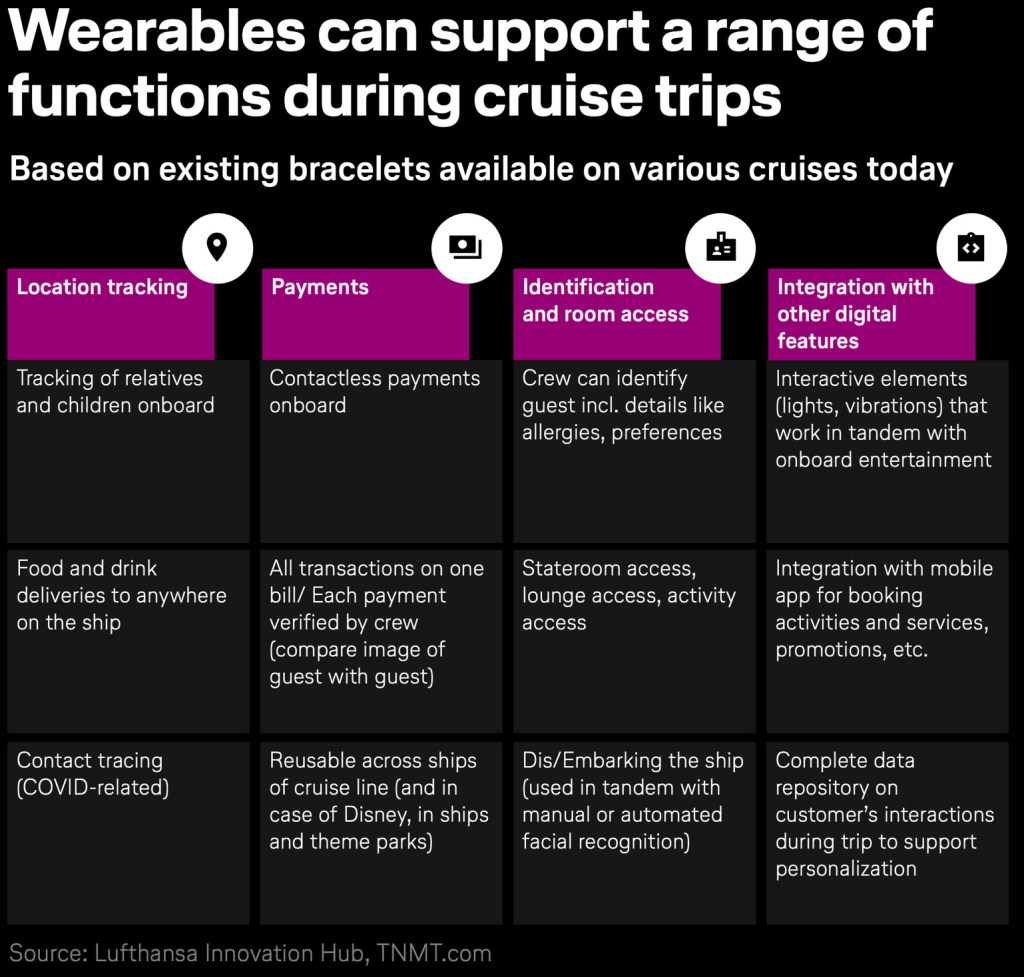
At first glance, cruise wearables might seem like sector-specific gimmicks. Fun, but not transferable. That would be a mistake. The same logic applies in the air.
Not wristbands. Not handouts. Just better use of what’s already on our wrists.
Because right now, most airlines treat the Apple Watch like an afterthought. Basic wallet integration. That’s it. Meanwhile, the opportunity is massive.
Smarter luggage tracking. Apple AirTags now work better than most airline systems. United, Lufthansa Group, and KLM already support real-time tracking via iPhone and Apple Watch.
Faster payments. Contactless is standard. Smartwatches are gaining ground. Wizz Air is going fully cashless onboard by April 2025. Lufthansa, Finnair and Ryanair already accept tap-to-pay. United removed the card-linking requirement. And airports like Shannon and Munich are piloting full wrist-pay systems.
Live updates. United now sends Live Activity updates straight to the Apple Watch. Schiphol uses motion sensors and predictive wait times, feeding that info into smartwatch alerts. Shannon does the same, in a smaller setting.
Now imagine what comes next.
Your wearable becomes your digital ID. It tells you which security lane to use. Guides you to your gate. Gets you through immigration. Pays for everything. Unlocks your hotel room. Becomes your driver’s licence.
No wallet. No passport. No printed anything.
One device. From door to door.
The only thing missing? Infrastructure.
Because readiness isn’t the problem. According to the same SITA report, nearly three out of four travellers are open to storing their passport digitally. That includes smartwatches.
So the question isn’t whether people want this. It’s whether the industry is ready to build it.
The tech is here. The behaviour is here. The wearables are here.
The only thing left is to connect the dots.
And put the passport where it belongs. On your wrist.
See what it did for cruises already.
 Moey writes here.
Leave a comment